Table Of Content
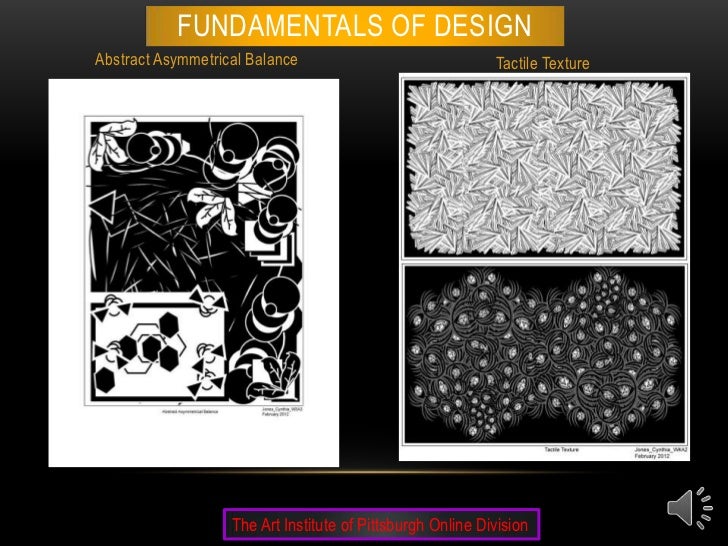
They extend from design fundamentals you can learn as a self-taught artist to entire fields of study in creating visually engaging content. Balance is the even distribution of visual weight within the pictorial space. Utilizing the principle of balance ensures that visual elements are not haphazardly thrown together into a composition. Balance provides viewers with a sense of harmony and is aesthetically pleasing to the eye. Color, placement of compositional elements, and symmetry can be all used to achieve balance. In addition to understanding graphic design theory, knowing user experience is essential.

Principle of Design: Proportion
The color scheme uses complimentary colors blue and orange to create high contrast and guide your eye throughout the composition. The rectangles that contain each block of information also creates a stable structure that unites the information. The legibility of the text is derived from choosing uniform fonts and keeping the proportions the same throughout. Each one layers on top of the other until you’re left with the foundation for creating something incredible—whether you’re designing a logo, a website, or a custom illustration. If you want the lowdown on all the graphic design basics, you’ve come to the right place because we’re going to cover them all.
Colour
It can create balance, improve the standard or level of design, and reduce clutter. Designs with more white spaces are referred to as “clean” pieces of work. Or is everything concentrated on one corner of the design, leaving the other end vacant with ample negative space?
Shape
If functional and aesthetic elements don’t add to the user experience, forget them. Franks Spillers’ design checklist is an example of customized design principles for mobile user experience (UX) design. Movement is the path the viewer’s eye takes through the work of art or design. Movement can guide the viewer to focal areas or create the look or feeling of action.

A subtractive mix of colours in paint and print produces the CMYK (i.e., Cyan, Magenta, Yellow and blacK) colour system. Proportion is the relative size and scale of the various elements within a design. The fiber used to create this hat is an example of tactile texture.
Balance and alignment
Repetition, when done intentionally, can be used to create a random rhythm. Just be careful not to go overboard—too much texture in a single design can quickly become overwhelming. Like form, it can be part of a three-dimensional object, as in the example below (a small prickly cactus in a shiny ceramic pot). Basic forms can bring a touch of realism to your work, which is a powerful tool when used in moderation.
Combining design principles isn’t just limited to two at a time. Most truly great designs combine at least half of these elements, and sometimes more. White space doesn’t necessarily have to be completely white or free of pattern. In fact, subtle patterns can add visual interest to white space while still allowing it to function as a sort of visual “breathing space” within a design. Some very basic elements, including line, shape, form, texture, and balance. They might not seem like much on their own, but together, they're part of almost everything we see and create.
Fundamentals of Graphic Design
While digital textures can be applied to your designs using computer software, it's essential to pay attention to the role of physical materials in the final printed output. The texture is an engaging and versatile design element that can be experimented with to create visually intriguing compositions. When used appropriately, white space can prevent your design from appearing crowded or claustrophobic, ensuring the composition feels balanced and inviting. On the other hand, neglecting white space can result in a format that feels overwhelming or difficult to comprehend, diminishing its overall impact. We can use colour, shape, contrast, scale, and/or positioning to achieve this.
Using Contrast to Create Emphasis
It also creates a sense of consistency by using a repeating motif that the viewer comes to expect. This makes it particularly useful when it comes to creating your distinct brand identity. These tools give you a better understanding—and appreciation—of what goes into the designs we see every day. As you become acquainted with them, you’ll start to see what does and doesn’t work (and why), as well as how you can apply these principles to your own creative work. Design principles are guidelines to follow if you want to create effective visuals, from oil paintings and blog graphics to eye-catching social media posts.
Some companies find their purpose through their vision or mission statement. Others have a purpose from the beginning because they were built to solve a particular challenge. If, for whatever reason, you’re not happy with the course and it doesn’t help you improve your designs, I don’t want yo’ money. Simply let me know within 30 days of when the course gets released and I’ll give you a full refund. I’m Laura Elizabeth and I’ve been a designer for almost a decade, I’ve worked on projects for HelpSpot, LaraTalent, RightMessage and Double Your Freelancing. I also speak at numerous conferences around the world (you might have seen me on stage at SmashingConf, Laracon, LTV Conf, Patterns Day and many more).
Designers can guide this by using lines, edges, shapes, and colors to create focal points and encourage certain ways of seeing. Hierarchy is how you present the elements on your design (whether it’s a brochure, a website or a business card). This directs viewers to where they should focus their attention. As a general rule of thumb, the larger the design element, the more attention-grabbing it will be. With the right balance, alignment, and composition, you can create designs that look like they’ve been brought to life.
As you embark on this creative odyssey, never underestimate the value of patience, persistence, and curiosity. Keep pushing the boundaries of your skills, network with like-minded individuals, and remain open to new concepts and methods. Ultimately, by harnessing your potential, you can leave an indelible mark on the visual landscape, enriching the lives of those who encounter your creations. Iterative development reduces the risk of critical mistakes and ensures that the product meets the users' needs. This approach allows developers to focus on minor, manageable improvements that can be implemented quickly and efficiently. This reduces the likelihood of significant issues arising and enables developers to fix minor problems that may occur along the way, ensuring that the project continues without delay.
Your work as a graphic designer will be available to your target audience, so it's necessary to understand their experience and preferences. Reading about user experiences and researching industry trends can help you design with your audience in mind, ultimately creating better outcomes for your clients. Understanding the psychological impact of various colours is essential for emphasising critical information and guiding the viewer's eye throughout your design. By harnessing the emotive power of colour, you can create visually engaging compositions that resonate with your audience on a deeper level. Gestalt is important, for instance, in making separate sections of a website distinct by increasing the white space between them.
Mònica Losada is breathing fresh air into graphic design fundamentals - It's Nice That
Mònica Losada is breathing fresh air into graphic design fundamentals.
Posted: Wed, 16 Nov 2022 08:00:00 GMT [source]
This course is aimed at complete beginners to design… but is by no means slow-paced or patronising. If you’re technically minded and consider yourself creatively challenged this course is for you. We’ll go through a simple step by step process that you can repeat in it’s entirety or pick and choose for any project you work on. As a developer, you’re likely involved in design decisions on a daily basis. Maybe you’re being asked to add a new feature to your company's web app, or you’ve had an idea for a side project that you want to look half-decent. When customers are considering a purchase online, they want to be able to scrutinize images that give a high level of detail.
Think of rays shining from the sun, petals blossoming from a rose, or a squirt of tomato sauce in the middle of a juicy meat pie. To run with the seesaw example, it would be like having a 100kg weight on one side and 100 kg of feathers stacked on the other. It still achieves balance but provides a whole different experience. Luckily for us, in the late 1970s, an influential designer named Dieter Rams saw this problem. In response, he asked himself what constituted good design and came up with his own list of ten principles. Think of design as carpentry and these principles as your toolbox.


No comments:
Post a Comment